More connection with employer than ever
Earlier employee experience survey* already showed that working Netherlands feels more connected than ever with the employer in this corona time. Organizations made more effort to maintain engagement and connectedness, including by facilitating working from home and allowing onboarding to take place online.
Enthusiasm, calculated via the so-called 360 degree feedback software, rose from -3 in 2020 to +12 in 2021. This means that for the first time in years, there are more “promoters” (enthusiastic employees) than “detractors” (fewer or non-enthusiastic employees). enthusiastic employees/critics). Across the board, the average satisfaction of Dutch employees is 7.4. That was a 7.1 last year. “Just like before corona, we want to have fun at work. Job satisfaction is still the most important theme for working people in the Netherlands”, says Elise Kamhoot, research consultant at Integron .
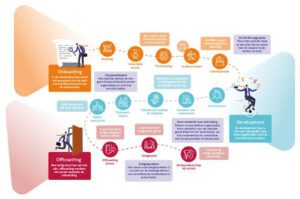
Drivers of new employees
Employment conditions play a more important role when switching to a new employer , as the white paper shows. In 2020, these conditions were still in 4th place, now it is the most important driver. Home-work distance has become less of a determining factor.
These changes seem to go hand in hand with the economic recovery in the Netherlands. Kamhoot: “We see that employees in 2020 were happy with the security of their position. Now the working Netherlands dares to look around more in search of better employment conditions , more challenges at work and an improvement in position.”
To find new employees, Kamhoot advises employers to be transparent about what is and is not possible in terms of employment conditions . “Make sure they know where they stand so they may make the switch sooner,” Kamhoot said.
More attention needed for offboarding
Although working people in the Netherlands are more satisfied, there is still an important task for organizations to ensure job satisfaction and good working conditions to keep people on board. For example, 1 in 3 employees indicates that the previous employer could have kept them. Only 11% of employees would recommend their previous employer (10% in 2020), so barely 1 in 10.
In addition, just under a third (32%) experience a good offboarding process. “These are absolutely points of attention for organisations. Offboarding, in other words: leaving the company, deserves just as much attention as onboarding. Listening better to the wishes and needs of employees, so that they can be responded to, offers opportunities to keep in touch with each other. The application behavior and its frequency also say a lot about the need of employees to leave.
The differences in job application behavior between generations are enormous. For example, 'only' 15% of the oldest generation (baby boomers) plan to apply for a job in the coming years, while this is no less than 50% for the youngest generation (generation Z), "says Kamhoot.

Comments
Post a Comment